
As we say shalom to 2016, the key drivers for the markets in the year ahead have become more obvious, says Neeraj Gambhir, managing director and head of fixed income, India, Nomura. First, there is a surging dollar. Second, rising commodity prices. Then, we have the effects of demonetisation.

'We have relatively strong growth and a healthy corporate earnings cycle as positives, but a worrisome current account deficit and high inflation as challenges.'

The Reserve Bank of India (RBI) on Wednesday announced to increase the policy repo rate by 50 basis points to 4.9 per cent, the second hike in five weeks aimed at quelling the inflation. The MPC vote was unanimous and has decided to keep stance withdrawal from accommodative, RBI Governor Shaktikanta Das said in a press conference on Wednesday. The decision was taken during a three-day meeting of the RBI's Monetary Policy Committee (MPC) to review the interest rates in the country. The MPC voted unanimously to increase the policy repo rate by 50 bps to 4.90 per cent," Das said.

Indian corporates might face higher borrowing cost in the overseas market in short-run due to the Greek debt crisis.

Benchmark equity indices Sensex and Nifty rose by nearly 1 per cent on Friday, extending gains for a second day on the back of buying in banking, financials and energy stocks in line with firm global trends. The 30-share BSE Sensex advanced further by 462.26 points or 0.88 per cent to settle at 52,727.98. During the day, it rallied 644.15 points or 1.23 per cent to 52,909.87. The Nifty gained 142.60 points or 0.92 per cent to settle at 15,699.25.

A sharp rally in domestic stocks from June lows has once again rendered Indian markets expensive to their emerging-market (EM) peers. The 12-month forward price-to-earnings (P/E) multiple for the Nifty50 Index is around 20.6x - 82 per cent higher than 11.3 per cent for the MSCI EM Index. India's valuation premium has hit a five-month high. This is on the back of sharp outperformance to EM and global peers from June lows and also due to earnings downgrades, following the April-June quarter of 2022-23 earnings.

Retail inflation fell to a five-month low of 4.35 per cent in September from 7.27 per cent in the year-ago period as prices of vegetables and other items declined, according to government data released on Tuesday. The moderation in Consumer Price Index-based inflation is in line with the assessment of Reserve Bank Governor Shaktikanta Das who recently projected substantial softening of retail inflation. The CPI inflation was at 5.3 per cent in August and at 7.27 per cent in September 2020.

From the Sensex basket, Tata Steel jumped over 5 per cent. Mahindra & Mahindra, JSW Steel, Tata Motors, Axis Bank, Sun Pharma, Reliance Industries and Maruti were the other biggest gainers. Infosys, Tata Consultancy Services, Titan, Wipro, Hindustan Unilever and Nestle were among the laggards.

The wholesale price-based inflation eased to a 29-month low of 1.34 per cent in March on easing prices of manufactured products and fuel items, even though food articles turned expensive.
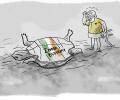
S&P Global Ratings on Wednesday cut India's growth projection for the current fiscal to 7.3 per cent from 7.8 per cent earlier on rising inflation and the longer-than-expected Russia-Ukraine conflict. In its Global Macro Update to Growth Forecasts, S&P said inflation remaining higher for long is a worry, which requires central banks to raise rates more than what is currently priced in, risking a harder landing, including a larger hit to output and employment. S&P had in December last year pegged India's GDP growth in the 2022-23 fiscal, which began on April 1, 2022, at 7.8 per cent.

Maruti's strategy for the SUV segment is to arrest the decline in customers for entry level hatchbacks.
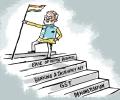
As the Ukraine conflict impacts the global GDP, India is projected to grow by 6.4 per cent in 2022, slower than the last year's 8.8 per cent but still the fastest-growing major economy, with higher inflationary pressures and uneven recovery of the labour market curbing private consumption and investment, according to a UN report. The UN Department of Economic and Social Affairs said in its World Economic Situation and Prospects (WESP) report released on Wednesday that the war in Ukraine has upended the fragile economic recovery from the pandemic, triggering a devastating humanitarian crisis in Europe, increasing food and commodity prices and globally exacerbating inflationary pressures. The global economy is now projected to grow by only 3.1 per cent in 2022, down from the 4.0 per cent growth forecast released in January 2022.

The weak April-June quarter (first quarter, or Q1) results of the largest listed specialty chemical maker, SRF, and multiple global headwinds for the sector are expected to weigh on the prospects of Indian specialty chemical companies in 2023-24 (FY24). Stocks in the sector (down 7-18 per cent) have underperformed the benchmarks (up over 10 per cent) in the past three months, and given the multiple challenges, the trend is likely to continue. Kotak Institutional Equities expects a very weak quarter (Q1FY24) for the sector due to destocking, demand weakness across certain critical end-use industries, and price erosion amid intense competition from Chinese suppliers.

Seven consecutive sessions of decline in the equity market has eroded the wealth of investors by a whopping Rs 10.42 lakh crore and the benchmark Sensex has tumbled more than 2,000 points during this period. Concerns over more rate hikes by developed economies, weak global equity markets and fresh foreign fund outflows from the domestic market have dented investor sentiments. On Monday, the BSE Sensex dropped 175.58 points or 0.30 per cent to end at 59,288.35 points, marking a decline for seven straight trading sessions.

Fourteen states that include Maharashtra, Punjab, Andhra Pradesh and Rajasthan have amended the Agricultural Produce Marketing Committee Act this year. This allows farmers to sell their produce directly to buyers offering them the best price.

Dwaipayan Bose examines the seven important factors that investors about exchange traded funds must know before they start investing/trading in them.

The Reserve Bank of India on Thursday opted for a pause second time in a row, maintaining key benchmark policy rate at 6.5 per cent as inflation moderates. The rate increase cycle was paused in April after six consecutive rate hikes aggregating to 250 basis points since May 2022. Announcing the bi-monthly monetary policy, RBI Governor Shaktikanta Das said the Monetary Policy Committee (MPC) unanimously decided to keep the rate unchanged at 6.5 per cent.

'India's sizeable forex reserves should help stem a possible fall in our currency.'

'Macro headwinds are rising for Indian equities in the form of rising commodity prices, especially oil, depreciating rupee, fiscal challenges, election-related uncertainty and upside risks to inflation'

The Budget should use the extra RBI surplus to better effect, suggests A K Bhattacharya.
'A soft landing of the Indian economy would be a long-term positive for the equity markets.'
The World Bank on Monday said hardening interest rates and a surge in oil prices worldwide will have only a marginal impact on India's economy and the country would continue to witness high GDP growth.
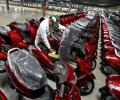
What has hit sentiment further is a draft proposal by the government to increase vehicle insurance premiums for financial year 2022-23 (FY23). Third-party motor insurance premiums have not been increased over the last two years and if this is approved, insurance costs for specific segments could rise by a fifth. The worst impacted is the 350cc and above two-wheeler segment, where premiums are up 21 per cent. Royal Enfield (Eicher Motor) is the market leader in the segment. The premiums in the 150-350cc two-wheeler category are also being inc

Marico's January-March quarter (Q4) results were slightly better than consensus. Revenue was up by 1.7 per cent year-on-year (Y-o-Y) to Rs 2,280 crore. Ebitda grew by 12.5 per cent Y-o-Y to Rs 440 crore. Adjusted PAT was up 10.3 per cent Y-o-Y to Rs 320 crore.
International Monetary Fund (IMF) expects India's inflation to hover around 2 per cent during 2009-10, mainly on account of declining commodity prices and weakening demand resulting from economic slowdown.
Some of the hard and soft commodities in the resource universe are printing endless new highs, enriching producers. Analysts continue to deliver rosy forecasts and raise target prices on the commodities themselves and most of their related equities. Despite this fact, companies lower down in the food chain than the production level are not responding at all.

Buying a car, particularly a diesel-powered one, is set to pinch the customers' pockets even more from the next financial year, as the second phase of Bharat Stage VI (BSVI) emission norms kicks in. The rules require cars to be compliant with real driving emission (RDE) norms, which measure pollutants emitted by cars while they are being driven on the road, unlike in a laboratory test. The norms may increase the cost of producing diesel vehicles by nearly Rs 75,000 to Rs 80,000, and petrol-powered ones by Rs 25,000 to Rs 30,000, analysts said.

Eicher Motors is a leader in the premium motorcycle segment, where it holds market share of over 85 per cent under the Royal Enfield (RE) brand. The company's joint venture VE Commercial Vehicles (VECV) with Volvo, where it holds 54.5 per cent stake, gives it a strong footing in commercial vehicles (CVs). The company had good results in FY23 and it has a strong balance sheet and good operating margins.
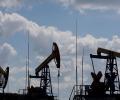
Despite discounts on Russian crude oil - which fell to the lowest since the Ukraine war began - and the rising sanctions, import volumes from the country will remain stable for now or at least till July, said refinery officials. "There is an appetite for Russian crude, and shipments are not expected to taper off beyond this point unless something major happens. "Talks are on, and buying will continue," an official at a major refinery said.
Continuing its offensive on the United Progressive Alliance over its failure to curb the rising prices of essential commodities, the Communist Party of India-Marxist on Monday said it will stall the passage of the Forward Contract Regulation Amendment Bill, which will enable foreign direct investment and foreign institutional investment in the commodities market, in Parliament.
India's GDP is estimated to grow at 7.4 per cent in the financial year 2022-23 with rising prices triggered by the Russia-Ukraine conflict posing as the biggest challenge to the global economic recovery, Ficci's Economic Outlook Survey released on Sunday said. According to the survey, the Reserve Bank of India (RBI) is likely to start a rate hike cycle in the second half of 2022, while a repo rate hike of 50-75 bps is expected by the end of the current fiscal. The RBI is expected to continue supporting the ongoing economic recovery by keeping the repo rate unchanged in its April policy review, the survey said.

Britannia Industries will take higher grammage cuts instead of increasing prices in a bid to tackle rising inflation, the firm said. The biscuit major took a 10 per cent price hike in financial year 2021-22 (FY22) and resorted to reducing pack sizes as an indirect way of increasing prices. In the previous financial year, the ratio of grammage reduction was 65 per cent, which will be higher in FY23.

Rise in vegetable prices can reverse the benefits of low oil prices.

The government on Monday ruled out making public the RBI report detailing the reasons why the central bank could not keep inflation within the targeted 6 per cent upper limit for the three consecutive quarters. "Yes sir, RBI has furnished a report to the central government, as mandated under Section 45ZN of the RBI Act, 1934 and Regulation 7 of RBI Monetary Policy Committee and Monetary Policy process Regulations, 2016," minister of state for finance Pankaj Chaudhary said in a written reply. The said provisions of the RBI Act, 1934, and regulations therein does not provide for making the report public, he said.

'As China's reopening euphoria fizzled out on the back of some disappointing economic data, we saw inflows coming back to India with full force in the past 3-4 months.'

India's inflation trajectory in the coming months will be influenced more by the geo-political situation due to the war in Europe and its impact on supply chains and commodity prices. However, the country is better placed than most to "weather the storm" and achieve growth of close to 8 per cent in the current fiscal year, the finance ministry said in its latest monthly economic report on Thursday. "Through the channel of imports, elevated global crude and edible oil prices now have a significant impact on India's inflation outlook. "Government measures to keep the prices of these commodities in check, along with the recent hike in policy rates by the RBI, are expected to temper inflationary pressures in the economy," the monthly economic report for April, drafted by the finance ministry's economic division, said.

The stellar rise in corporate earnings in financial year 2021-22 (FY21) and FY22 did not result in a corresponding boom in capital expenditure (capex), with listed companies' investment in fixed assets rising just 2.3 per cent year-on-year (YoY) in FY22, growing at the slowest pace in the last six years. In comparison, the firms' combined net profit jumped 63.5 per cent YoY in FY22, while net sales increased 31.1 per cent - the fastest pace in over a decade. The 955 non-financial companies in Business Standard's sample reported combined net profit of Rs 7.18 trillion in FY22, compared with Rs 4.39 trillion in FY21 and Rs 2.59 trillion in FY20.

Moody's Investors Service has warned that India, along with the Philippines, Thailand, and Vietnam are highly vulnerable to volatile food and energy prices in the Asia-Pacific region as the Russia-Ukraine conflict continues to disrupt supplies and raise the cost of agricultural products, especially cereals and vegetable oils, as well as fertilizers and other agricultural inputs. This is so because these countries have a higher weighting of energy and food prices in their consumer price index (CPI) baskets, Moody's said in its report released on Tuesday. The weighting of energy and food in overall Indian CPI stands at over 55 per cent.
A derivative is a product whose value is derived from the value of one or more underlying variables or assets in a contractual manner. The underlying asset can be equity, forex, commodity or any other asset.

Of $90 billion remittances that India is expected to receive in 2022, only $27.4 billion has come in the first half of the year.
